


Testosterone Cypionate Explained: Stability, Injection Frequency, and Use Cases
Testosterone Cypionate is one of the most widely recognized long-ester testosterone compounds used in performance and hormone-support contexts. Its popularity comes from a balance of stable blood levels, manageable injection schedules, and predictable effects, making it a common reference point when discussing testosterone esters.
This article explains how Testosterone Cypionate works, why its ester length matters, and in which situations it is typically chosen—without focusing on sales or product-specific promotion.
What Is Testosterone Cypionate?
Testosterone Cypionate is a testosterone molecule bound to a cypionate ester, a medium-to-long carbon chain that slows the release of testosterone after injection. The ester does not change the hormone's biological role; instead, it controls how quickly testosterone enters the bloodstream.
Once injected, enzymes gradually cleave the ester, releasing free testosterone. This controlled release is what gives Cypionate its reputation for smooth, steady hormone levels compared to shorter esters.
Ester Length and Hormone Stability
One of the defining features of Testosterone Cypionate is its release profile. The cypionate ester is long enough to avoid sharp hormonal spikes, but not so long that it becomes difficult to manage.
Key characteristics of its stability include:
- Slower absorption compared to propionate-based testosterone
- More consistent serum testosterone levels between injections
- Reduced fluctuation-related side effects for many users
Because of this balance, Cypionate is often discussed alongside Enanthate when evaluating long-acting testosterone options.
Injection Frequency: Why Cypionate Is Considered "Flexible"
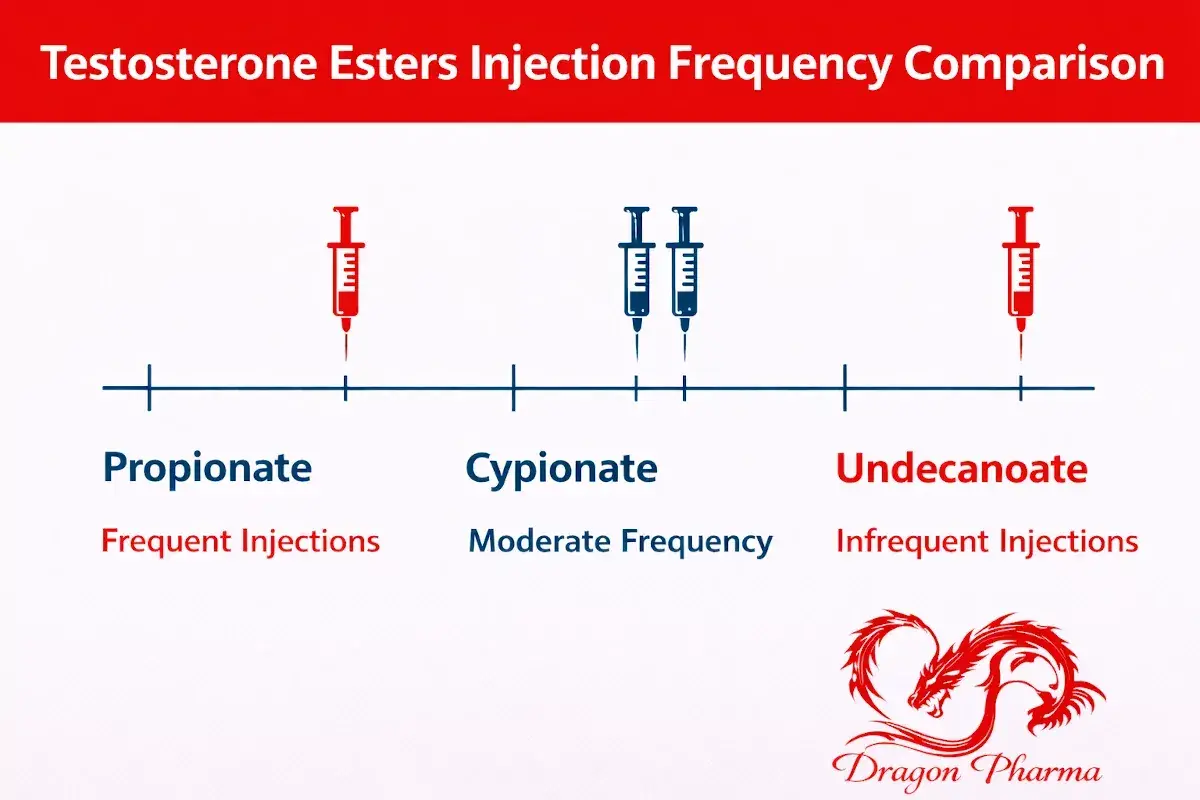
Injection frequency varies by ester length, with cypionate offering a balance between stability and flexibility.
Injection frequency is largely dictated by ester length. Testosterone Cypionate allows for less frequent injections than short esters, while still offering enough control to fine-tune hormone levels.
In practice, many users prefer Cypionate because:
- It does not require daily or near-daily injections
- Blood levels remain relatively stable across the week
- Scheduling is easier to maintain long-term
From an educational standpoint, this makes Cypionate a useful compound when explaining how ester length influences hormone management.
Testosterone Cypionate vs Other Common Esters
Understanding Cypionate is easier when compared to other testosterone esters:
Cypionate vs Propionate
Propionate releases much faster, requiring more frequent injections and producing quicker hormonal peaks and drops.
Cypionate vs Enanthate
These two are very similar in behavior. Differences are often more about availability and personal preference than dramatic pharmacological distinctions.
Cypionate vs Undecanoate
Undecanoate releases much more slowly and is often used in medical settings where very infrequent injections are preferred.
These comparisons help explain why Cypionate is often seen as a middle-ground option—long-acting, but still manageable.
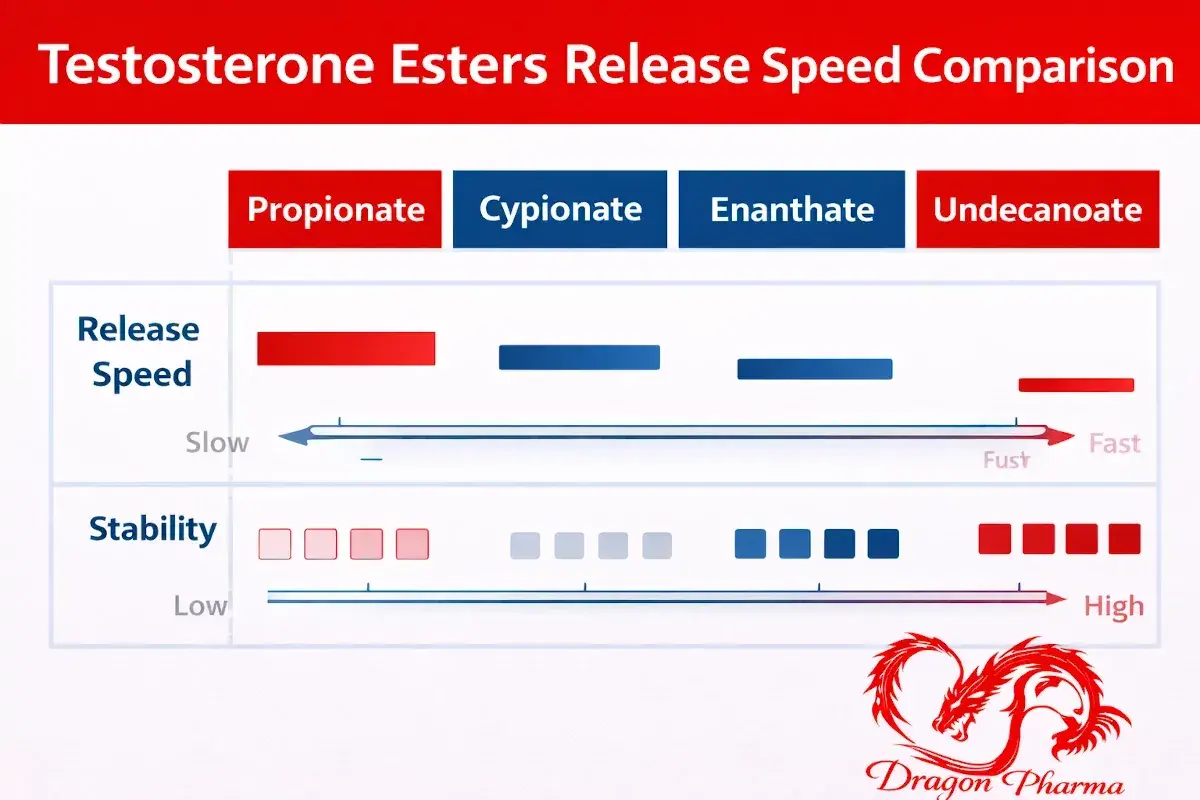
Different testosterone esters influence release speed and hormonal stability.
Common Use Cases in Performance Contexts
Testosterone Cypionate is frequently referenced in discussions about:
- Foundational testosterone support in longer cycles
- Hormonal stability during extended training phases
- Baseline androgen levels when stacking other compounds
Because testosterone is the primary male androgen, Cypionate often serves as the core compound around which other agents are discussed—particularly in educational cycle planning.
Estrogen Conversion and Management Considerations
Like all exogenous testosterone, Cypionate can aromatize into estrogen. The rate of conversion is influenced more by total testosterone levels than by the ester itself.
Educational discussions around Cypionate often include:
- Awareness of estrogen-related side effects
- The role of aromatase inhibitors when clinically appropriate
- The importance of balance rather than suppression
These considerations are not unique to Cypionate but are part of any informed discussion about testosterone use.
Why Testosterone Cypionate Is Often Used Long-Term
Another reason Testosterone Cypionate is frequently referenced is its suitability for extended use. The predictable release profile makes it easier to evaluate how the body responds over time.
This long-term consistency is why Cypionate is often discussed in contexts such as:
- Extended training blocks
- Maintenance or cruise phases
- Educational comparisons with shorter esters
Its behavior makes it a reliable example when explaining testosterone pharmacokinetics.
Quality, Consistency, and Manufacturing Standards
As with any injectable compound, manufacturing quality and dosing accuracy are critical factors. Articles discussing Testosterone Cypionate often emphasize the importance of:
- Consistent concentration per milliliter
- Proper carrier oils and filtration
- Transparent labeling and batch control
For readers looking to explore a lab-produced option that reflects these standards, you can find additional technical details on the Cypionat 250 testosterone cypionate injection available through Dragon Pharma's catalog.
Final Thoughts
Testosterone Cypionate remains one of the most referenced testosterone esters because it combines stability, flexibility, and predictability. Its ester length allows for steady hormone levels without demanding excessive injection frequency, making it a useful benchmark when discussing testosterone-based protocols.
From an educational perspective, understanding how Cypionate works provides a foundation for comparing other testosterone esters and for appreciating the role ester design plays in hormone delivery.
Articles
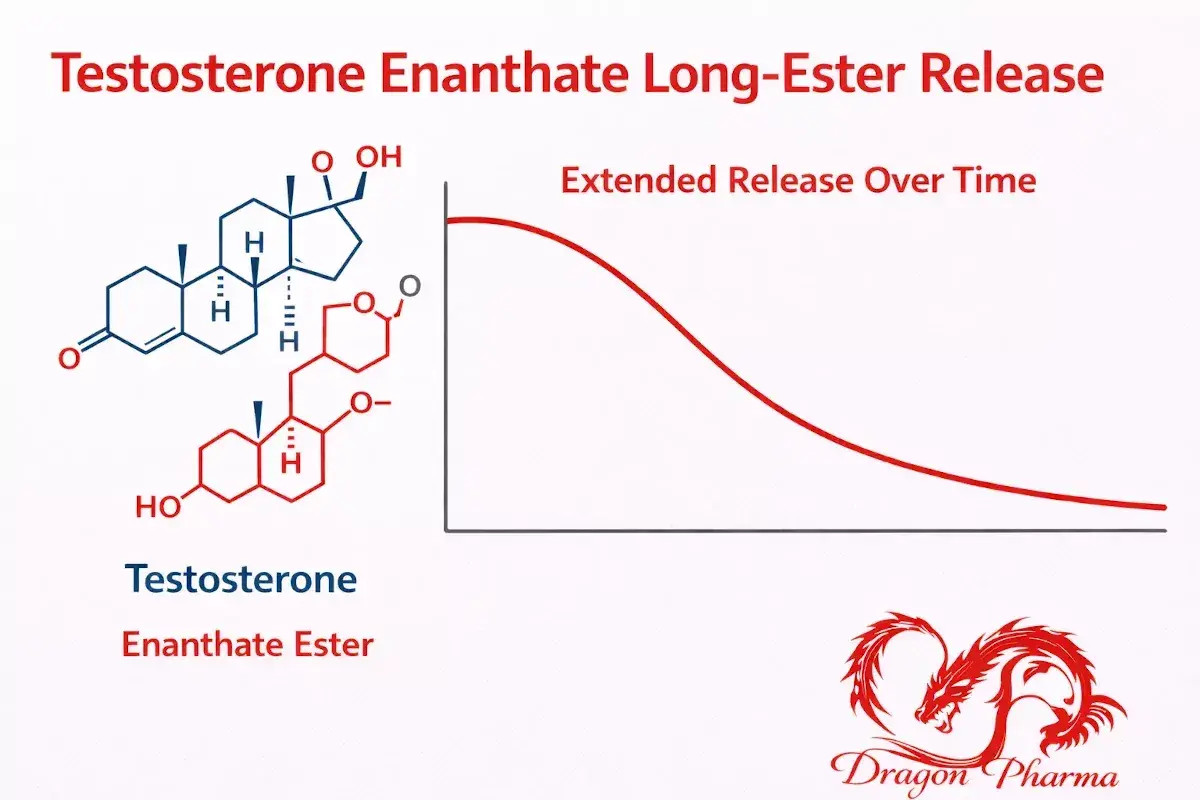
A clear guide to long-ester testosterone enanthate, focusing on how its ester affects release timing, stability, injection frequency, and why it’s often used in longer training phases.
A clear explanation of why Anavar is labeled a milder oral steroid, focusing on its anabolic-androgenic balance, lack of estrogen conversion, and how it compares to harsher orals.
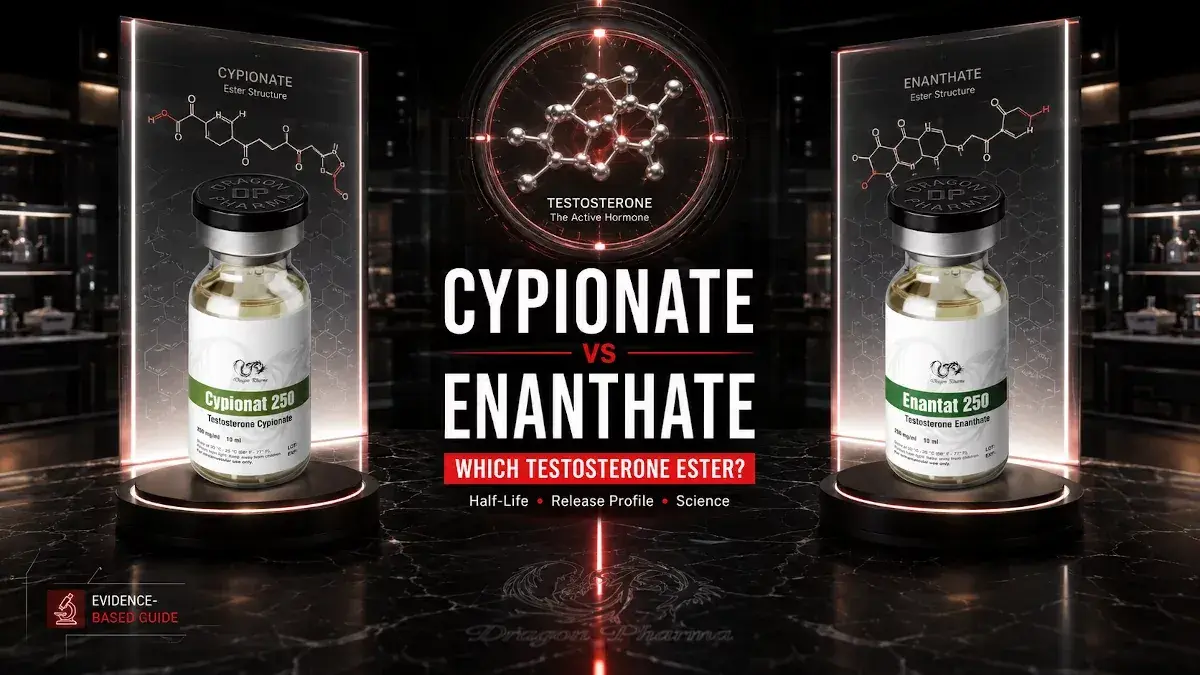
Discover the real differences between Testosterone Cypionate and Enanthate, including half-life, release profile, side effects, and why the ester matters less than many believe.