


Cypionate vs Enanthate: Choosing the Right Testosterone Ester
Introduction
Among injectable testosterone preparations, Testosterone Cypionate and Testosterone Enanthate are easily the two most recognized long-acting esters in both medical practice and the bodybuilding community. Although countless discussions attempt to determine which one is "better," the reality is far less dramatic than many online debates suggest.
Both compounds ultimately deliver the exact same hormone—testosterone. The primary difference lies in the ester attached to the testosterone molecule, which influences how quickly the hormone is released after an intramuscular injection. Once the ester is removed by enzymes in the body, the active hormone entering circulation is identical regardless of whether the original product contained Cypionate or Enanthate.
This seemingly small chemical distinction has created decades of confusion. Some athletes believe Testosterone Cypionate produces greater strength, while others claim Testosterone Enanthate causes less water retention or leads to leaner gains. These opinions are widespread on forums and social media, yet controlled scientific evidence supporting meaningful performance differences remains limited.
For most healthy adults using physician-prescribed testosterone replacement therapy (TRT), as well as experienced physique athletes, factors such as consistent administration, appropriate monitoring, manufacturing quality, and overall training and nutrition have a much greater influence on outcomes than choosing between these two long-acting esters.
This guide explores how Testosterone Cypionate and Testosterone Enanthate compare from a scientific perspective. We'll examine ester chemistry, pharmacokinetics, half-life, blood concentration stability, common myths, and practical considerations to help you understand what truly matters when comparing these two widely used testosterone preparations.
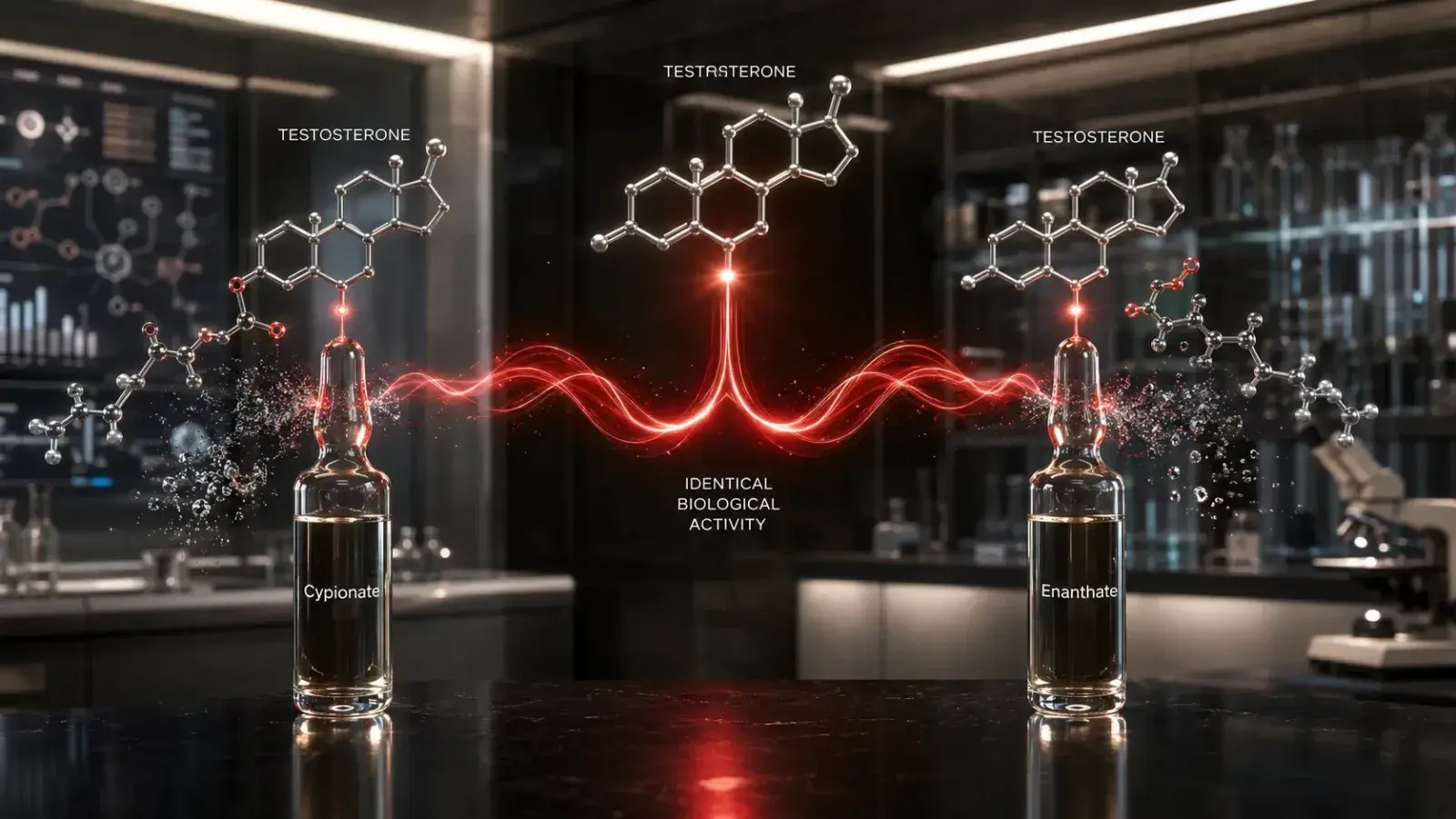
Testosterone Cypionate and Testosterone Enanthate release the same active hormone after the ester is removed, although their release profiles differ slightly.
Testosterone Esters Explained
To understand the difference between Cypionate and Enanthate, it first helps to understand why testosterone esters exist at all. Pure testosterone is rapidly metabolized after entering circulation, making it impractical for long-lasting injectable therapy. Chemists solved this limitation by attaching an ester chain to the testosterone molecule, creating compounds that dissolve readily in oil and are released gradually from the injection site.
What Is an Ester?
An ester is a small chemical group temporarily attached to testosterone. Rather than changing how testosterone works inside the body, the ester primarily influences how quickly the hormone becomes available after injection.
For readers interested in the underlying chemistry, the NIH PubChem entry for Testosterone Cypionate provides detailed information about its molecular structure, physicochemical properties, and pharmaceutical identifiers.
Following intramuscular administration, the oil-based solution forms a depot within the muscle. Testosterone slowly diffuses from this depot into surrounding tissues, where enzymes known as esterases remove the ester chain. Once this process is complete, free testosterone enters the bloodstream and interacts with androgen receptors throughout the body.
Importantly, androgen receptors cannot distinguish whether the testosterone originally came from a Cypionate or Enanthate ester. After the ester is removed, the active hormone is chemically identical.
Why Esters Matter
Although the ester does not change testosterone's biological activity, it affects several practical characteristics:
- How quickly blood testosterone levels begin to rise
- How long therapeutic concentrations are maintained
- How frequently injections are typically administered
- The amount of testosterone contained in each milligram of the finished product
- The overall release profile from the injection site
Because both Cypionate and Enanthate are considered relatively long-acting esters, their release curves overlap substantially. While laboratory measurements show small pharmacokinetic differences, these distinctions become much less noticeable during routine clinical use or consistent injection schedules.
The Depot Effect
Unlike oral medications that are absorbed rapidly through the digestive tract, injectable testosterone esters create a slow-release reservoir inside muscle tissue. This depot gradually releases the medication over several days, helping maintain more stable testosterone concentrations than immediate-release formulations.
This prolonged release explains why injections are generally performed less frequently than oral medications. Rather than requiring multiple daily doses, long-acting esters allow testosterone levels to remain elevated for several days before another administration becomes necessary.

Scientific visualization showing how testosterone esters slowly release testosterone after intramuscular injection.
Why Different Esters Exist
Several testosterone esters have been developed throughout pharmaceutical history, including Propionate, Phenylpropionate, Isocaproate, Decanoate, Undecanoate, Enanthate, and Cypionate. Each offers a different balance between injection frequency and duration of action.
Testosterone Enanthate became widely adopted internationally during the latter half of the twentieth century and remains one of the most extensively studied injectable testosterone preparations worldwide. Testosterone Cypionate gained particular popularity in North America, especially in the United States, where it continues to be commonly prescribed for testosterone replacement therapy.
Today, both esters remain well established in medical practice and performance-oriented communities because they offer an effective compromise between convenience and relatively stable hormone concentrations.
Cypionate and Enanthate at a Glance
When comparing Testosterone Cypionate and Testosterone Enanthate side by side, their similarities greatly outweigh their differences. Both are oil-based injectable formulations designed to provide sustained testosterone release over several days, making them suitable for testosterone replacement therapy as well as other medically supervised uses.
| Characteristic | Testosterone Cypionate | Testosterone Enanthate |
|---|---|---|
| Active Hormone | Testosterone | Testosterone |
| Ester | Cyclopentylpropionate | Heptanoate (Enanthate) |
| Primary Purpose | Long-acting testosterone delivery | Long-acting testosterone delivery |
| Typical Half-Life | Approximately 7–8 days* | Approximately 4–5 days* |
| Administration | Intramuscular injection | Intramuscular injection |
| Release Pattern | Slow | Slow |
| Medical Use | TRT and hypogonadism treatment | TRT and hypogonadism treatment |
| Worldwide Availability | More common in North America | Widely used internationally |
*Reported half-life values vary among studies depending on formulation, injection site, analytical methods, and study design.
Likewise, the NIH PubChem record for Testosterone Enanthate describes its chemical properties and pharmaceutical characteristics, illustrating how both preparations differ primarily in their ester structure while ultimately delivering the same active hormone.
The Difference in Testosterone Content
One subtle distinction often overlooked involves molecular weight. Because the Cypionate ester is slightly heavier than the Enanthate ester, each milligram of Testosterone Enanthate contains marginally more actual testosterone than an equal milligram of Testosterone Cypionate.
In practical terms, this difference is extremely small and rarely produces meaningful physiological effects during routine clinical use. It certainly does not explain the dramatic differences sometimes described in anecdotal online discussions.
Clinical Similarities
From a therapeutic perspective, physicians generally expect both esters to provide comparable improvements in men with clinically confirmed testosterone deficiency when prescribed appropriately. Goals such as restoring physiological testosterone concentrations, improving symptoms, supporting bone mineral density, preserving lean body mass, and enhancing quality of life depend primarily on achieving appropriate hormone levels rather than selecting one ester over the other.
How Similar Are They Really?

Once the ester is removed, androgen receptors respond to identical testosterone molecules regardless of the original ester.
The simple answer is: far more similar than different.
Once Testosterone Cypionate or Testosterone Enanthate enters circulation and the ester is removed, both preparations release identical testosterone molecules. Every androgen receptor throughout the body responds to that same hormone regardless of which ester originally carried it.
This means the physiological actions remain essentially identical, including testosterone's effects on:
- Protein synthesis
- Nitrogen retention
- Muscle maintenance and growth
- Strength development
- Red blood cell production
- Bone mineral density
- Libido and sexual function
- Recovery from training
- General well-being in hypogonadal men
Why Do People Report Different Experiences?
Despite nearly identical pharmacology, it is common to encounter individuals who strongly prefer one ester over the other. Several explanations may contribute to these perceptions:
- Different injection schedules
- Carrier oil formulation
- Variation between manufacturers
- Differences in concentration (mg/mL)
- Changes in nutrition or training occurring simultaneously
- Expectation bias
- Natural biological variability between individuals
Because so many variables can change simultaneously, attributing every perceived difference solely to the ester is often impossible.
Scientific Perspective
Modern endocrinology generally considers Testosterone Cypionate and Testosterone Enanthate to be therapeutically interchangeable in many clinical situations when equivalent testosterone exposure is achieved. While physicians may adjust injection frequency or dosage to optimize hormone stability for individual patients, the choice between these two esters rarely determines the overall effectiveness of treatment by itself.
Likewise, exercise physiology does not currently provide convincing evidence that one ester consistently produces superior muscle hypertrophy, strength gains, or athletic performance when equivalent testosterone concentrations are maintained over time.
Evidence Summary
Current scientific understanding suggests that differences between Testosterone Cypionate and Testosterone Enanthate are primarily pharmacokinetic rather than anabolic. In most real-world scenarios, maintaining consistent testosterone levels is considerably more important than the specific long-acting ester selected.
The next sections examine those pharmacokinetic differences in greater detail, including half-life, injection frequency, hormone stability, and why these factors often receive more attention than they deserve when comparing two otherwise very similar testosterone esters.
Key Pharmacokinetic Differences
 Although both esters deliver the same hormone, their release from the injection depot occurs at slightly different rates.
Although Testosterone Cypionate and Testosterone Enanthate ultimately deliver identical testosterone molecules, they do not reach the bloodstream in exactly the same way. The attached ester influences how quickly the medication leaves the intramuscular depot, how long it remains in circulation, and how blood testosterone concentrations fluctuate over time.
These differences fall under the field of pharmacokinetics—the study of how the body absorbs, distributes, metabolizes, and eliminates medications. Importantly, pharmacokinetic differences should not be confused with anabolic potency. A slower release does not make testosterone "stronger"; it simply changes the timing of hormone delivery.
For athletes and patients alike, understanding these release characteristics helps explain why two nearly identical testosterone preparations may require slightly different injection schedules while still producing comparable long-term physiological effects.
Testosterone Cypionate
Testosterone Cypionate contains the cyclopentylpropionate ester, which is marginally larger and heavier than the Enanthate ester. This additional molecular weight contributes to a slightly slower release from the injection site and a somewhat longer elimination profile in many pharmacokinetic studies.
Historically, Testosterone Cypionate has been the preferred long-acting injectable testosterone preparation in the United States and remains widely prescribed for testosterone replacement therapy. Its popularity has also extended into bodybuilding, where many athletes appreciate its relatively smooth release characteristics.
In practice, however, the difference is subtle. Most users would struggle to distinguish Cypionate from Enanthate based solely on how they feel, particularly when injections are administered consistently.
- Long-acting injectable ester
- Slightly heavier ester chain
- Gradual release from the injection depot
- Commonly prescribed throughout North America
- Well established in testosterone replacement therapy
Testosterone Enanthate
Testosterone Enanthate uses the heptanoate (Enanthate) ester, one of the most extensively researched testosterone esters in medical literature. It has been prescribed internationally for decades and remains one of the most common injectable testosterone formulations worldwide.
Compared with Cypionate, Enanthate may leave the depot and enter circulation slightly faster, although the difference becomes increasingly difficult to appreciate once regular administration schedules are established.
From a practical standpoint, both esters maintain testosterone concentrations over similar periods, and physicians frequently adjust injection intervals according to laboratory results and individual patient response rather than relying solely on published half-life values.
- Long history of clinical use
- Widely available internationally
- Slightly shorter ester chain
- Comparable therapeutic effectiveness
- Flexible injection scheduling
Half-Life Comparison
One of the first statistics people encounter when researching testosterone esters is the reported half-life. Unfortunately, this number is also one of the most misunderstood.
A medication's half-life refers to the approximate time required for its concentration in the body to decrease by half. It does not indicate how long the medication "works," nor does it define the ideal injection schedule for every individual.
Why Published Numbers Vary
Different scientific publications often report different half-life values for the same medication. This variability occurs because studies may differ in:
- Injection site
- Carrier oil formulation
- Analytical techniques
- Study population
- Dose administered
- Sampling intervals
As a result, published half-life values should be viewed as approximations rather than absolute constants.
| Characteristic | Cypionate | Enanthate |
|---|---|---|
| Reported terminal half-life | Approximately 7–8 days | Approximately 4–5 days |
| Overall duration | Long acting | Long acting |
| Typical clinical scheduling | Individualized | Individualized |
Why Half-Life Isn't the Whole Story
Imagine filling two water tanks at slightly different rates. Even if one drains a little more slowly than the other, both tanks may remain adequately full for the same practical period when they are refilled consistently. Injectable testosterone behaves in a similar way.
Once regular administration reaches a steady state, blood testosterone concentrations depend on the interaction between dosing interval, metabolism, absorption, and individual physiology rather than half-life alone.
This explains why experienced clinicians often focus more on laboratory monitoring, symptom control, and patient response than on theoretical pharmacokinetic calculations.
Injection Frequency: Does It Matter?
Although Cypionate and Enanthate have similar durations of action, how often injections are administered can have a greater influence on hormone stability than the choice of ester itself.
Long intervals between injections may produce larger fluctuations in testosterone concentrations, while more frequent administration generally reduces the size of hormonal peaks and troughs. The goal in clinical practice is often to maintain relatively stable hormone exposure rather than allowing dramatic oscillations.
Consistency Over Complexity
Rather than searching for the "perfect" ester, maintaining a consistent administration schedule is typically more important. Small deviations from an established routine can produce larger hormonal fluctuations than the modest pharmacokinetic differences between Cypionate and Enanthate.
For this reason, treatment schedules are individualized according to factors such as laboratory testing, symptom control, physician recommendations, and patient preference.
Potential Advantages of Stable Administration
- Smaller hormonal fluctuations
- More predictable testosterone concentrations
- Improved treatment consistency
- Simplified long-term monitoring
It is important to remember that injection frequency should always follow medical guidance for individuals receiving prescribed testosterone therapy. There is no universally optimal schedule suitable for everyone.
Important Point
In many situations, adjusting the timing of injections has a greater impact on testosterone stability than switching between Cypionate and Enanthate.
Blood Level Stability
One of the most common goals of testosterone therapy is achieving relatively stable blood testosterone concentrations over time. Large hormonal swings may contribute to inconsistent symptom control in some individuals, whereas smoother concentration curves generally make treatment easier to monitor.
Both Testosterone Cypionate and Testosterone Enanthate are capable of providing stable testosterone exposure when administered appropriately. Neither ester inherently guarantees smoother hormone levels under every circumstance.
Understanding Peaks and Troughs
Following an injection, testosterone concentrations gradually rise before reaching a peak. Over the following days, concentrations slowly decline until the next scheduled administration.
The highest concentration reached after administration is often referred to as the peak, while the lowest concentration immediately before the next dose is known as the trough.
Excessively long intervals between injections may increase the difference between these two points, whereas more frequent administration generally narrows the gap.
Individual Variation Matters
Even when two people receive identical testosterone preparations, blood concentrations can differ considerably due to:
- Body composition
- Muscle blood flow
- Injection technique
- Metabolic rate
- Liver enzyme activity
- Age
- Overall health status
Because of this natural biological variability, laboratory monitoring remains an important component of medically supervised testosterone therapy.
For athletes discussing performance enhancement, these same individual differences often explain why experiences shared online can vary so dramatically despite apparently identical products.
Muscle Growth and Strength
Perhaps the most frequently asked question is whether Testosterone Cypionate builds more muscle than Testosterone Enanthate. From a scientific standpoint, there is little reason to expect meaningful differences when equivalent testosterone exposure is achieved.
After enzymatic removal of the ester, both preparations release identical testosterone molecules capable of activating androgen receptors in skeletal muscle. The biological pathways responsible for protein synthesis, muscle maintenance, satellite cell activity, and tissue remodeling do not recognize which ester originally carried the hormone.
What Determines Results?
In both medical research and exercise physiology, adaptations such as increased lean body mass or improved strength depend on a wide range of variables, including:
- Training quality
- Progressive overload
- Nutrition
- Sleep
- Recovery
- Overall testosterone exposure
- Individual genetics
These factors have a substantially greater influence on long-term outcomes than selecting one long-acting testosterone ester over another.
Where the Myths Come From
Claims that one ester consistently produces "dryer gains," "faster strength," or "more muscle" are usually based on anecdotal reports rather than controlled comparative studies.
In many cases, differences attributed to the ester may actually reflect changes in diet, body weight, concurrent compounds, training intensity, hydration status, or simple expectation bias.
Ultimately, both esters serve the same purpose: delivering testosterone in a slow, sustained manner. The hormone itself—not the ester—is responsible for testosterone's physiological effects on muscle tissue.
Side Effects: Are They Different?
One of the most persistent misconceptions surrounding Testosterone Cypionate and Testosterone Enanthate is that each ester carries a unique side effect profile. In reality, the overwhelming majority of adverse effects associated with testosterone therapy stem from the hormone itself, not from the ester attached to it.
After the ester is enzymatically removed, both preparations release identical testosterone molecules into circulation. Consequently, both have the potential to produce the same physiological effects—both beneficial and adverse—particularly when blood testosterone concentrations exceed normal physiological ranges.
Shared Potential Side Effects
The following effects may occur with either Testosterone Cypionate or Testosterone Enanthate, depending on factors such as dosage, treatment duration, genetics, age, and underlying health conditions:
- Acne or oily skin
- Increased body or facial hair growth in genetically predisposed individuals
- Male-pattern hair loss in susceptible individuals
- Fluid retention
- Breast tissue enlargement (gynecomastia) due to aromatization
- Elevated hematocrit and red blood cell production
- Changes in cholesterol profile
- Possible increases in blood pressure in some individuals
- Reduced fertility through suppression of natural testosterone production
These effects are influenced primarily by overall testosterone exposure rather than the specific ester selected.
The Role of Aromatization
Testosterone naturally converts into estradiol through the action of the aromatase enzyme. This process is normal and necessary for numerous physiological functions, including bone health, cardiovascular function, and aspects of sexual health.
Because both Cypionate and Enanthate release the same testosterone molecule, both possess essentially the same potential to aromatize when equivalent testosterone concentrations are achieved.
Claims that one ester consistently causes less water retention or lower estrogen levels are not well supported by current scientific evidence.
Health Considerations
Individuals receiving medically prescribed testosterone should undergo regular follow-up with their healthcare provider. Monitoring commonly includes testosterone concentrations, hematocrit, hemoglobin, lipid profile, liver function where appropriate, prostate health when indicated, and overall cardiovascular risk assessment.
Why Do Athletes Report Different Experiences?
Spend enough time reading bodybuilding forums and you'll quickly encounter strong opinions favoring one ester over the other. Some individuals report smoother mood, improved strength, fewer injections, or reduced water retention after switching from Enanthate to Cypionate—or vice versa.
These experiences are genuine to the individual reporting them, but they do not necessarily demonstrate that one ester possesses fundamentally different anabolic properties.
Several Variables Change Simultaneously
When someone changes testosterone preparations, multiple factors often change at once:
- A different manufacturer
- Different carrier oil composition
- Different preservative concentration
- Different injection schedule
- Training modifications
- Nutritional changes
- Body composition changes
- Placebo or expectation effects
Because so many variables are introduced simultaneously, isolating the influence of the ester itself becomes extremely difficult.
Carrier Oils Matter More Than Many People Realize
Injection comfort, post-injection soreness, and tissue irritation are frequently influenced by the formulation rather than the testosterone ester. Manufacturers may use different carrier oils, solvents, or preservatives, each of which can affect how a product feels after administration.
Consequently, two Testosterone Enanthate products from different manufacturers may feel more different than a high-quality Testosterone Enanthate product compared with a high-quality Testosterone Cypionate product.
Individual Biology
Every person metabolizes medications differently. Factors such as muscle perfusion, enzyme activity, body composition, genetics, and general health all influence how testosterone is absorbed and utilized.
This natural variation helps explain why two individuals following seemingly identical treatment plans may still report different subjective experiences.
Bottom Line
Most perceived differences between Cypionate and Enanthate are likely explained by individual variability, formulation differences, or administration schedules rather than meaningful differences in testosterone's biological activity.
Medical Uses Around the World
Both Testosterone Cypionate and Testosterone Enanthate have been used in clinical medicine for decades to treat testosterone deficiency. Current recommendations from the Endocrine Society Clinical Practice Guideline emphasize confirming biochemical testosterone deficiency alongside compatible clinical symptoms before initiating testosterone replacement therapy.
Restoring testosterone to physiological concentrations may help improve symptoms such as reduced libido, fatigue, decreased bone mineral density, reduced lean body mass, and diminished quality of life in appropriately selected patients.
Regional Preferences
Although both esters are internationally recognized, prescribing preferences have historically differed between healthcare systems.
- United States: Testosterone Cypionate has traditionally been prescribed more frequently.
- Europe: Testosterone Enanthate has historically been one of the most widely available injectable testosterone formulations.
- Other regions: Availability often depends on national regulatory approvals, manufacturer presence, and healthcare policies.
Despite these regional differences, modern endocrine practice generally views both preparations as effective long-acting testosterone delivery systems when used appropriately.
Clinical decisions typically depend more on patient preference, availability, treatment response, and physician judgment than on any major pharmacological superiority of one ester over the other.
Similarly, the American Urological Association Testosterone Deficiency Guideline recommends individualized treatment plans together with ongoing clinical and laboratory monitoring rather than relying solely on a specific testosterone ester.
Common Myths About Testosterone Cypionate and Enanthate
Myth: Cypionate Builds More Muscle
Evidence: There is no convincing evidence demonstrating superior muscle growth when equivalent testosterone exposure is maintained.
Myth: Enanthate Produces Leaner Gains
Evidence: Body composition changes are primarily determined by overall testosterone exposure, nutrition, training, and genetics rather than the ester itself.
Myth: One Aromatizes Less
Evidence: Both release identical testosterone molecules and therefore possess essentially the same potential for aromatization under comparable conditions.
Myth: One Is Stronger
Evidence: Once the ester is removed, both preparations release the same biologically active testosterone.
Myth: Switching Esters Produces Dramatic Results
Evidence: Most reported improvements after switching formulations are more likely related to injection schedules, manufacturer quality, or individual variability.
Which Testosterone Ester Should You Choose?
For most individuals, choosing between Testosterone Cypionate and Testosterone Enanthate is less about identifying a "better" compound and more about selecting a reliable product that fits individual circumstances.
Both esters have extensive histories of medical use, predictable pharmacology, and well-established clinical experience. When administered appropriately, they are capable of producing very similar testosterone exposure over time.
Factors Worth Considering
- Availability in your region
- Product consistency
- Manufacturer reputation
- Independent laboratory verification
- Comfort with the formulation
- Medical guidance when prescribed for TRT
For many experienced athletes, consistency often proves more valuable than repeatedly changing between esters in search of marginal or unproven advantages.
Quality Matters More Than Ester Choice
When comparing injectable testosterone products, manufacturing quality is often a more meaningful consideration than whether the label reads "Cypionate" or "Enanthate."
High-quality pharmaceutical manufacturing focuses on factors such as accurate concentration, sterility, raw material purity, batch consistency, and rigorous quality control. Independent laboratory testing can provide additional confidence that a product contains the labeled amount of active ingredient.
If you're interested in learning more about these long-acting testosterone formulations, you can explore the laboratory-tested product information for Cypionat 250 and Enantat 250, including product specifications and available batch testing information.
Frequently Asked Questions
Is Testosterone Cypionate stronger than Testosterone Enanthate?
No. After the ester is removed, both release identical testosterone molecules with the same biological activity.
Which ester lasts longer?
Testosterone Cypionate generally demonstrates a slightly longer terminal half-life in published pharmacokinetic studies, although the practical difference is relatively small.
Can both produce the same muscle-building effects?
Current evidence indicates that comparable testosterone exposure results in similar anabolic effects regardless of whether Cypionate or Enanthate is used.
Why do some athletes prefer one over the other?
Individual preference may reflect formulation differences, carrier oils, injection schedules, manufacturer quality, or natural biological variability rather than differences in the testosterone molecule itself.
Do both require medical monitoring?
Yes. Individuals receiving prescribed testosterone replacement therapy should follow their healthcare provider's recommendations regarding laboratory testing and routine clinical monitoring.
Key Takeaways
- Both Testosterone Cypionate and Testosterone Enanthate release the same active hormone.
- The primary difference lies in the ester, which influences release speed rather than anabolic activity.
- Current evidence does not demonstrate meaningful differences in muscle growth or strength when equivalent testosterone exposure is achieved.
- Injection consistency often has a greater influence on hormone stability than the specific ester selected.
- Manufacturing quality, laboratory verification, and medical supervision remain essential considerations for anyone using prescribed testosterone therapy.
Rather than viewing Testosterone Cypionate and Testosterone Enanthate as competing compounds, it is more accurate to think of them as two closely related delivery systems designed to accomplish the same objective: providing sustained release of testosterone over time. For most individuals, the choice ultimately comes down to product quality, availability, and personal preference rather than dramatic pharmacological differences.
Articles
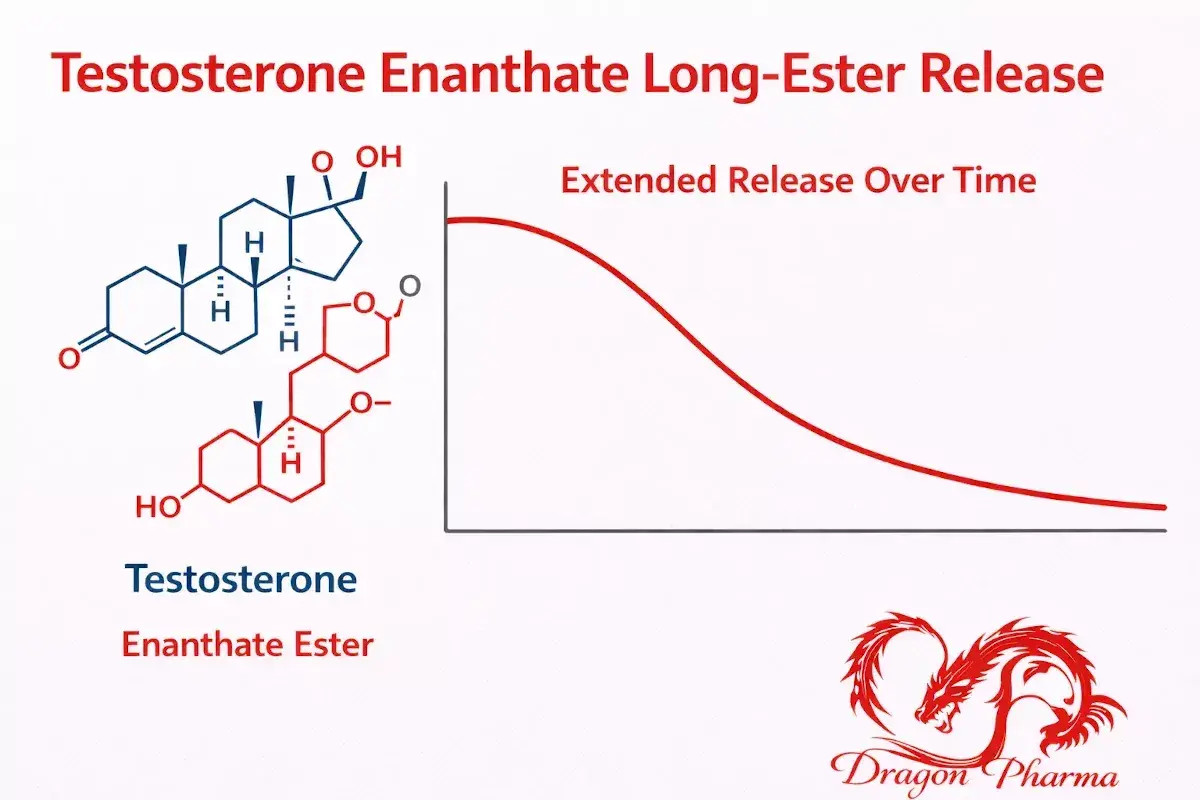
A clear guide to long-ester testosterone enanthate, focusing on how its ester affects release timing, stability, injection frequency, and why it’s often used in longer training phases.
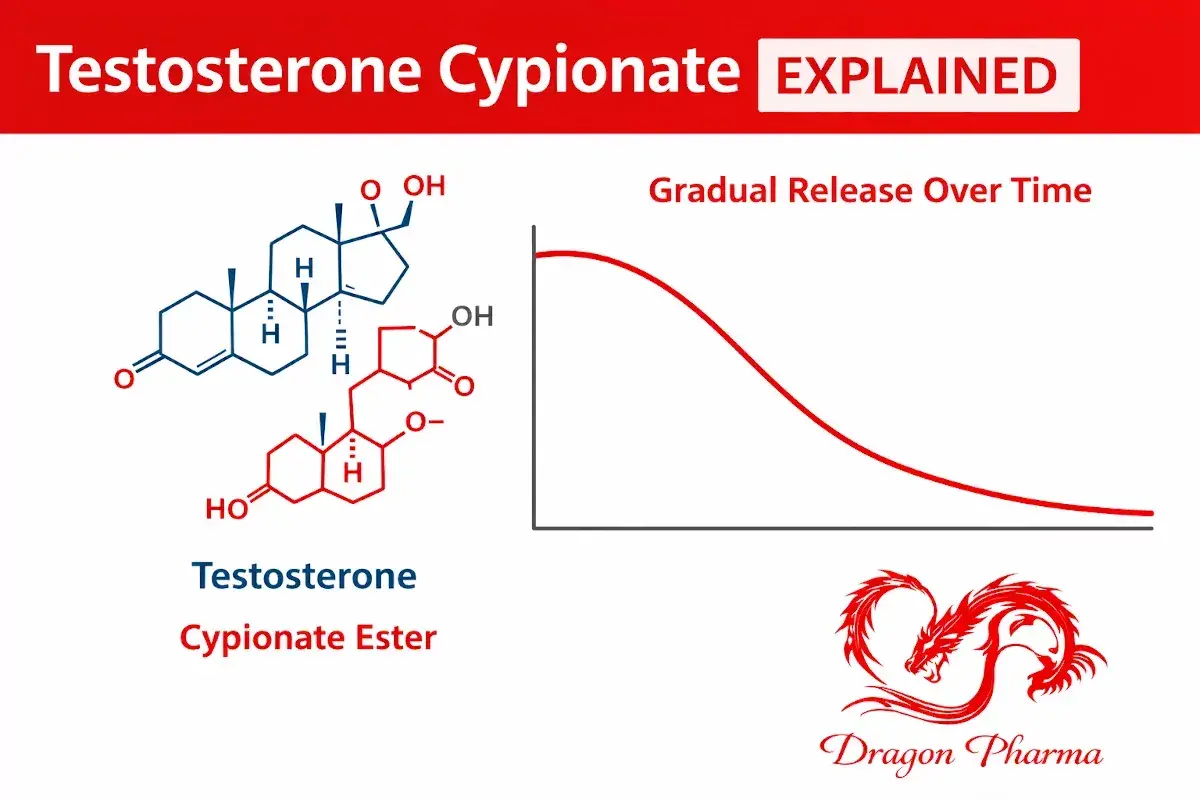
A clear explanation of testosterone cypionate, focusing on ester stability, release timing, injection frequency, and how it’s commonly used in long-term performance contexts.
A clear explanation of why Anavar is labeled a milder oral steroid, focusing on its anabolic-androgenic balance, lack of estrogen conversion, and how it compares to harsher orals.