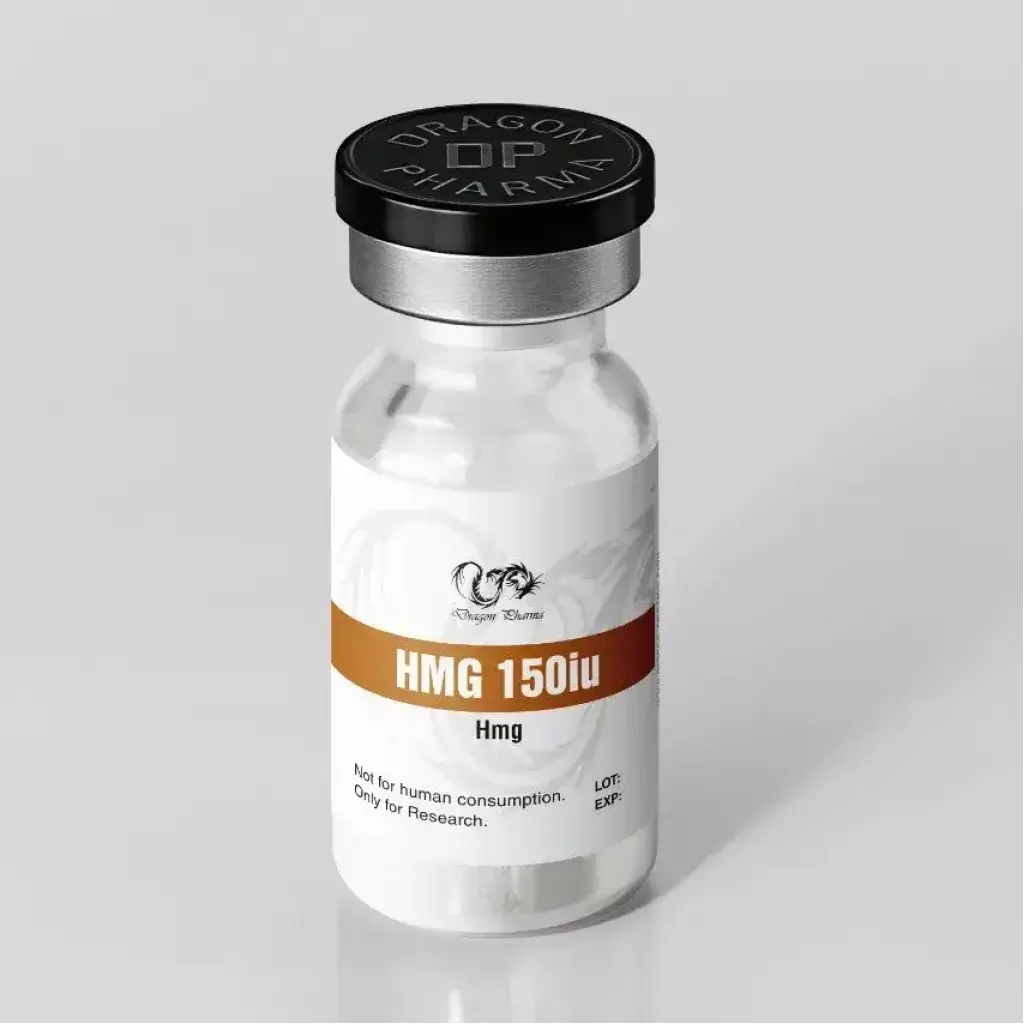
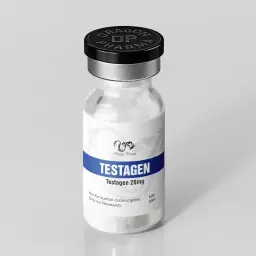
Dragon Pharma HMG
HMG 150 IU delivers a precisely dosed, research-grade preparation of Human Menopausal Gonadotropin, a naturally occurring hormone complex extracted from the urine of postmenopausal women. This biologically active preparation contains both Follicle-Stimulating Hormone (FSH) and Luteinizing Hormone (LH) in a balanced 1:1 ratio—typically 75 IU of each per 150 IU vial. These gonadotropins are fundamental regulators of reproductive function in both males and females. In males, LH stimulates Leydig cells in the testes to produce testosterone, while FSH supports Sertoli cell function and spermatogenesis (sperm production). This dual-action makes HMG uniquely valuable for research into complete hypothalamic-pituitary-gonadal (HPG) axis stimulation and fertility restoration.
For bodybuilders, athletes, and fertility researchers in the USA, Dragon Pharma HMG 150 IU offers a comprehensive research tool for studying both testosterone production and spermatogenic recovery. Unlike Human Chorionic Gonadotropin (HCG), which mimics only LH activity, HMG provides the complete natural gonadotropin profile. This makes it particularly valuable for research on post-cycle recovery where both testosterone normalization and fertility restoration are study endpoints. The 150 IU concentration is ideal for research protocols requiring precise titration and controlled stimulation of the HPG axis. Beyond fertility studies, HMG is researched for its potential in treating hypogonadism, investigating testicular function, and understanding the complex interplay between FSH and LH in male reproductive health. Manufactured by Dragon Pharma under strict quality control in certified European facilities, each vial ensures consistent bioactivity and purity for reliable endocrine research outcomes.
Key Benefits:
- Complete Gonadotropin Profile: Contains both FSH (75 IU) and LH (75 IU) for comprehensive HPG axis stimulation research.
- Dual-Action Testosterone & Fertility Support: LH stimulates testosterone production while FSH supports spermatogenesis and testicular health.
- Superior to HCG for Complete Recovery Research: Provides natural FSH activity that HCG lacks, making it ideal for fertility restoration studies.
- Optimal Research Concentration: 150 IU provides flexible dosing for various research protocols from mild stimulation to more aggressive HPG axis reactivation studies.
- Naturally Derived Bioidentical Hormones: Extracted from human sources, providing biological activity identical to endogenous gonadotropins.
Each 2 mL vial contains 150 IU of highly purified Human Menopausal Gonadotropin (typically 75 IU FSH + 75 IU LH) as a sterile lyophilized powder, processed and standardized under Dragon Pharma's exacting pharmaceutical-grade quality standards.
Product Specifications
| Product Name |
HMG 150 IU |
| Manufacturer |
Dragon Pharma |
| Substance |
Human Menopausal Gonadotropin (HMG) |
| Packaging |
2 mL glass vial, lyophilized powder |
| Lab Test Result |
Biologically standardized to 150 IU (75 IU FSH + 75 IU LH) |
| Half-Life |
FSH: ~24 hours; LH: ~1-2 hours (combined effect persists 24-48 hours) |
| Recommended Cycle |
Research protocols vary: 2-4 weeks for PCT studies, 4-12 weeks for fertility/hypogonadism research. |
| Form |
Lyophilized (freeze-dried) powder for reconstitution |
| Aromatization |
Indirect potential via increased testosterone production |
| Dosage (Research Models) |
Typically studied with every-other-day or 3x weekly subcutaneous/intramuscular administration. |
Usage Guidelines
Research Application Only: This information summarizes scientific literature for educational context. Dragon Pharma HMG 150 IU is a research chemical for laboratory investigation, not for human consumption.
In experimental settings, HMG is reconstituted with bacteriostatic water. Research typically utilizes subcutaneous or intramuscular administration. Due to the combined half-lives of FSH (~24h) and LH (~1-2h), study protocols often employ every-other-day or three-times-weekly dosing rather than daily administration. Research on post-cycle recovery usually incorporates HMG in the later stages of a cycle or during the transition to PCT. For fertility studies, longer protocols (8-12 weeks) are common to allow for complete spermatogenic cycle support. Studies monitoring testosterone, estradiol, and sperm parameters (count, motility, morphology) are standard in HMG research. Aromatase inhibitors like Aromasin may be included in study designs to manage potential estrogen conversion from increased testosterone.
- Post-Cycle Fertility Restoration Protocol (2-4 weeks): 150 IU every other day or 3x weekly alongside SERM-based PCT to study complete HPG axis recovery.
- Hypogonadism & Fertility Research (8-12 weeks): Extended protocols studying effects on testosterone levels, spermatogenesis, and overall reproductive function.
Post Cycle Therapy (PCT):
HMG is often researched AS PART of PCT protocols rather than requiring its own PCT. When used in post-cycle recovery studies, it's typically combined with SERMs like Clomid or Nolvadex for comprehensive HPTA restart. After HMG administration ceases, natural production should resume if the HPTA has been properly stimulated. Some research protocols incorporate a taper rather than abrupt cessation. For ongoing testicular support after HMG research, natural supplements or lower-dose HCG might be studied.
Synergistic Research Combinations:
HMG is frequently studied alongside other compounds for enhanced effects. For comprehensive PCT research, it combines with SERMs like Toremfine. With aromatase inhibitors like Arimidex, it allows study of testosterone elevation without excessive estrogen conversion. For fertility studies, combining with antioxidants like L-Carnitine may enhance sperm parameters. In hypogonadism research, pairing with Enclomiphene could be explored for sustained natural production. For bodybuilding recovery, combining with GHRP-2 may study synergistic anabolic effects.
Storage Instructions
Proper storage is critical to maintain the biological activity of this protein hormone preparation.
- Unreconstituted Powder: Store the sealed vial in a refrigerator at 2°C to 8°C (36°F to 46°F). Do NOT freeze the lyophilized powder. Under these conditions, HMG remains stable for up to 24 months. Protect from light and moisture.
- After Reconstitution: Once reconstituted with bacteriostatic water, the solution must be used immediately or refrigerated at 2°C to 8°C (36°F to 46°F) and used within 24-48 hours. The reconstituted solution is less stable than the powder and should not be stored for extended periods. Never freeze the reconstituted solution as this can denature the proteins.
- Important for Biological Activity: As a protein hormone, HMG is sensitive to temperature fluctuations and repeated freezing/thawing. Always use sterile technique during reconstitution to prevent bacterial growth that could degrade the proteins or cause contamination.
What is hMG peptide used for?
HMG (Human Menopausal Gonadotropin) is a research preparation containing both Follicle-Stimulating Hormone (FSH) and Luteinizing Hormone (LH). It's studied for:
- Fertility restoration research (stimulating spermatogenesis via FSH and testosterone production via LH);
- Hypogonadism studies (reactivating the HPG axis);
- Post-cycle recovery research (more comprehensive than HCG alone);
- Investigations into testicular function and reproductive health.
Its dual-hormone composition makes it valuable for complete reproductive system research.
What does hMG do to men?
In male research models, HMG exerts two primary effects through its components:
- LH component stimulates Leydig cells in the testes to produce testosterone;
- FSH component supports Sertoli cell function, which is crucial for spermatogenesis (sperm production and maturation).
This makes it valuable for studies on both testosterone restoration and fertility recovery. Unlike HCG (which only mimics LH), HMG provides the complete natural gonadotropin signal for comprehensive reproductive function research.
Does hMG increase testosterone?
Yes, through its LH component. LH (Luteinizing Hormone) binds to receptors on Leydig cells in the testes, stimulating testosterone synthesis and secretion. In research, HMG administration typically increases testosterone levels within days to weeks, depending on the study protocol. However, HMG also contains FSH, which doesn't directly increase testosterone but supports testicular health and spermatogenesis. For research focused solely on testosterone elevation without fertility aspects, HCG (which mimics only LH) might be a more specific research tool.
Is hMG better than hCG?
For research purposes, they serve different objectives. HMG contains both FSH and LH, making it superior for studies on COMPLETE reproductive recovery (testosterone + fertility). HCG mimics only LH, so it's better for research focused solely on testosterone stimulation without the fertility component. HMG is more expensive and less stable in solution. HCG has a longer half-life. The choice depends on research goals: comprehensive fertility/testosterone studies (HMG) vs. testosterone-only research (HCG). Some studies use both sequentially for optimal results.
How should HMG be stored for research integrity?
For optimal research outcomes: Unreconstituted powder should be refrigerated at 2°C-8°C (36°F-46°F)—DO NOT FREEZE. After reconstitution with bacteriostatic water, use immediately or refrigerate and use within 24-48 hours. The protein hormones degrade more rapidly in solution. Never freeze reconstituted HMG as freezing can denature the proteins. Always use sterile technique to prevent bacterial contamination that could compromise research results or cause protein degradation.
No customer reviews yet.
Log in to share your experience with this product.