
PPAR-delta Agonist (Non-Hormonal Performance Enhancer)
Dragon Pharma GW501516 20 mg, widely known as Cardarine, is a revolutionary performance-enhancing compound that operates through a completely non-hormonal pathway. Unlike anabolic steroids or SARMs that work on androgen receptors, Cardarine is a potent PPAR-delta (Peroxisome Proliferator-Activated Receptor delta) agonist. This unique mechanism fundamentally changes how the body utilizes energy, shifting its primary fuel source from carbohydrates to stored fatty acids. The result is a dramatic and multifaceted enhancement of physical performance: drastically increased endurance, accelerated fat loss, and significant improvements in cardiovascular health markers.
Originally developed for metabolic and cardiovascular diseases, Cardarine's ability to enhance exercise capacity by up to 70% in animal studies made it a game-changer in the athletic world. Users report being able to train longer, harder, and recover faster between sets, making it invaluable for both cardio sessions and high-volume weight training. Furthermore, it actively improves blood lipid profiles by increasing HDL (good) cholesterol and decreasing LDL (bad) cholesterol and triglycerides, offering a protective effect often needed when using other performance-enhancing drugs. Dragon Pharma's 20 mg tablet, supplied in sachets of 100, provides an optimal dose for measurable results. It's important to note that while Cardarine is non-hormonal and non-suppressive, responsible use and adherence to recommended dosages are always advised.
Key Benefits:
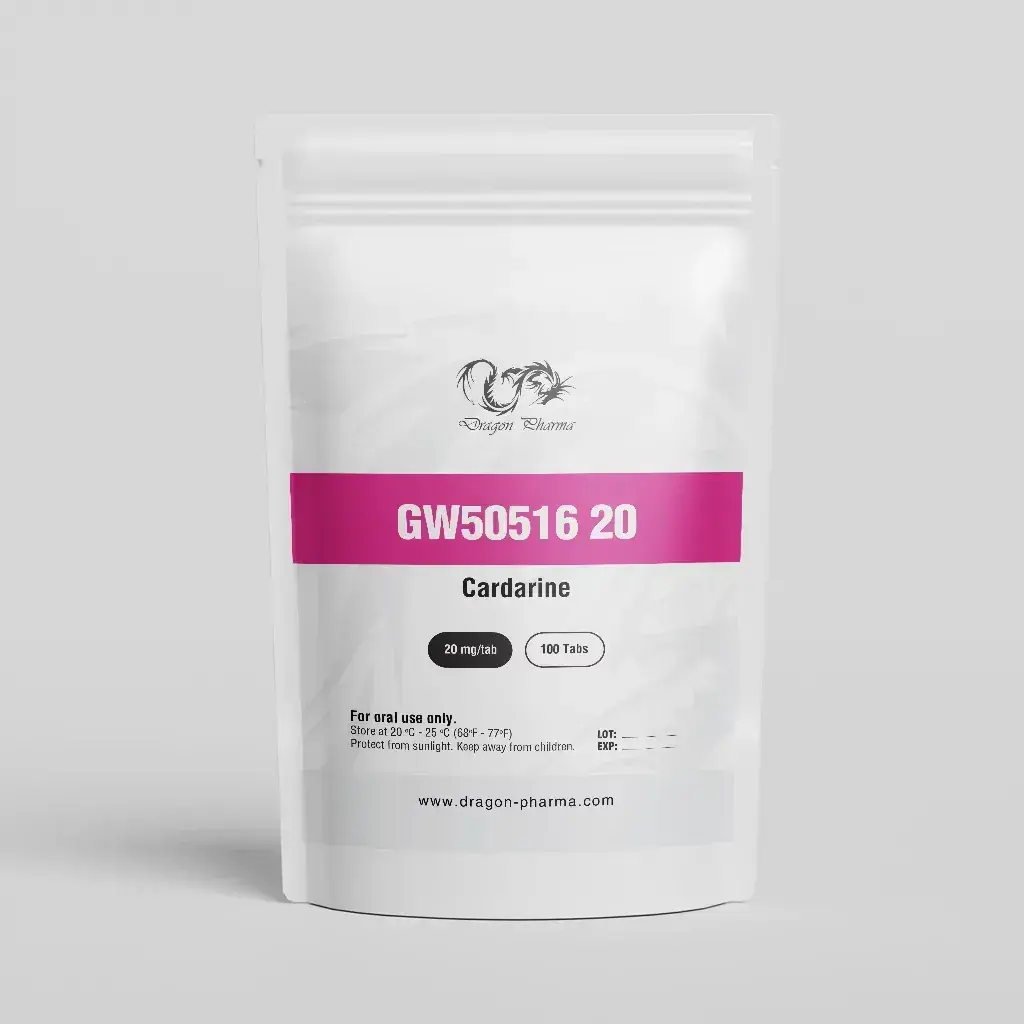
Each sachet contains 100 tablets of 20 mg Cardarine (GW501516), manufactured under strict quality control standards in Dragon Pharma's certified facilities.
| Product Name | GW501516 20 mg |
| Manufacturer | Dragon Pharma |
| Substance | Cardarine (GW501516) |
| Packaging | 100 Tablets / Sachet |
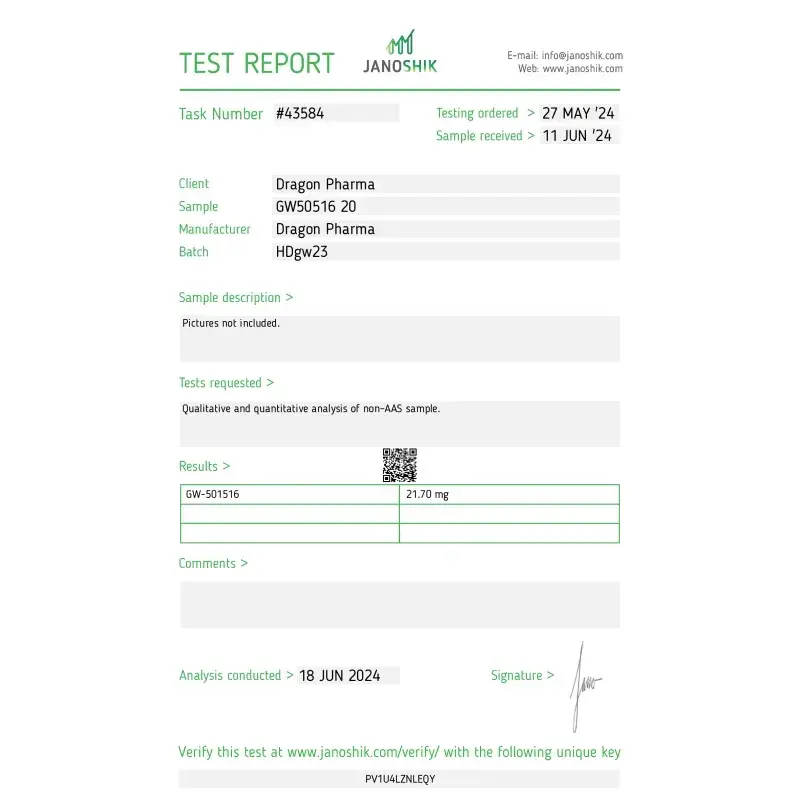
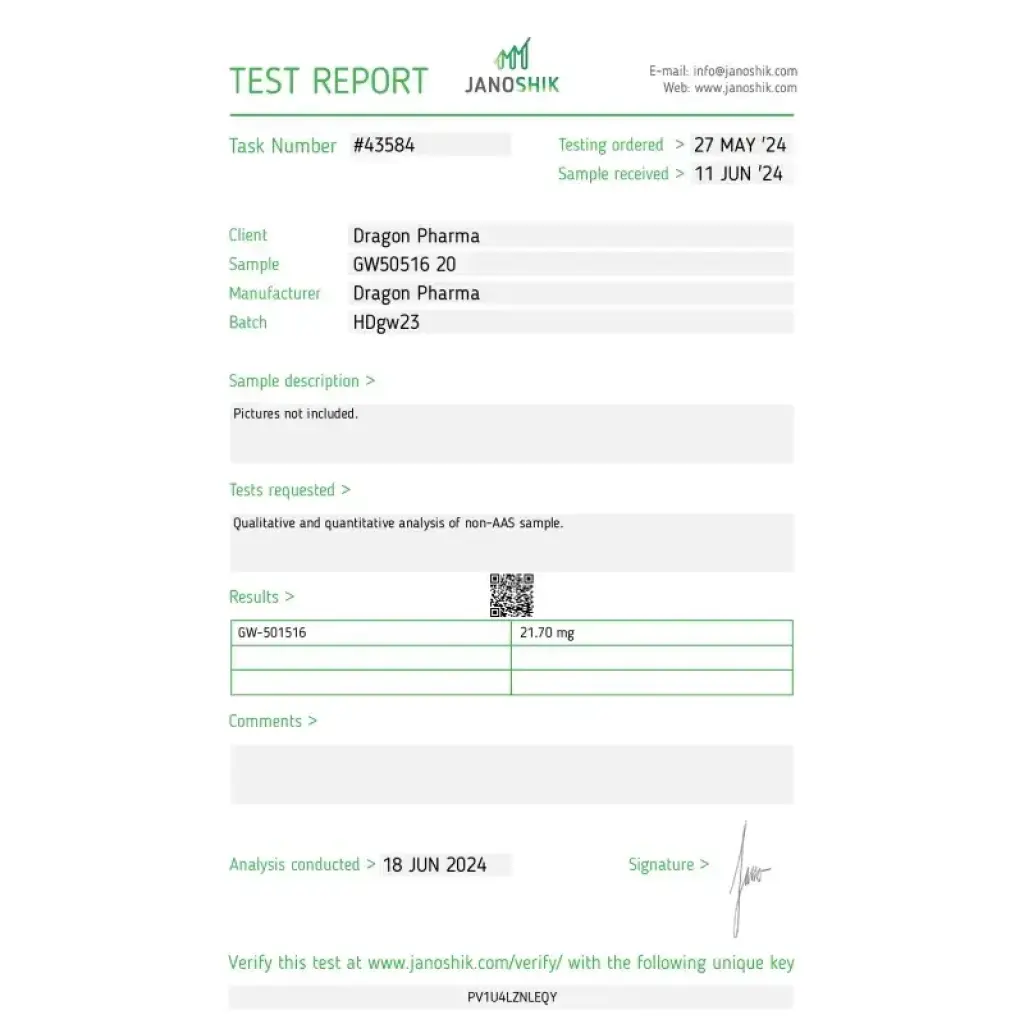
| Lab Test Result | 21.70 mg (Exceeds label claim) |
| Half-Life | ~16-24 hours |
| Recommended Cycle | 8-12 weeks (with breaks) |
| Form | Oral Tablet |
| Aromatization | No (Non-hormonal) |
| Dosage | 10 mg - 20 mg per day |
Important Note: While Cardarine is non-hormonal and well-tolerated, it is prudent to follow sensible cycle lengths and dosages. It is often used as a supportive compound alongside other agents.
Cardarine does not require a traditional PCT as it is non-hormonal and does not suppress the HPTA. You can stop usage at the end of your cycle without a taper. Any PCT you run would be for other suppressive compounds in your stack, not for Cardarine itself.
Cardarine is not methylated and is not known to be hepatotoxic. In fact, it may have protective effects.
This independent lab analysis confirms Dragon Pharma GW501516 20 mg tablets contain 21.70 mg of active Cardarine, exceeding the labeled claim. This verifies not only authenticity but also consistent over-filling, ensuring you receive maximum potency and value for your endurance and cutting goals.
To preserve the chemical stability and potency of Cardarine tablets:
Yes, Cardarine is an effective fat-burning agent, but its mechanism is unique. It doesn't directly stimulate the nervous system like Clenbuterol. Instead, it activates PPAR-delta pathways, which reprogram metabolism to preferentially use stored fat as fuel during exercise and at rest. This shift in energy substrate utilization, combined with the dramatic increase in exercise capacity it provides, leads to significant fat loss over time, especially when paired with a proper diet and training regimen.
Cardarine's mechanism is through agonism of the PPAR-delta (Peroxisome Proliferator-Activated Receptor delta) receptor. Activating this receptor triggers several effects: it increases the expression of genes involved in fatty acid oxidation (burning fat for energy), enhances glucose metabolism in muscles, and promotes the formation of "slow-twitch" endurance muscle fibers. Essentially, it tells the body to become more metabolically efficient, endurance-focused, and fat-adapted.
Yes, research indicates it can promote a shift toward more endurance-oriented muscle fibers. PPAR-delta activation encourages the development of Type I (slow-twitch) muscle fibers, which are more fatigue-resistant and efficient at using oxygen and fat for energy. This fiber-type shift is a key reason behind the massive endurance increases users experience. It does not directly build muscle size like an anabolic compound but changes the muscle's metabolic characteristics for better endurance performance.
No, Cardarine is neither a SARM nor a steroid. It is often grouped with SARMs for convenience but is pharmacologically distinct. SARMs selectively bind to androgen receptors. Cardarine does not interact with androgen or any sex hormone receptors at all. It is a PPAR-delta agonist, working on entirely different metabolic pathways. This is why it has no androgenic side effects and does not suppress natural testosterone production.
The cancer concerns stem from a now-famous rodent study where rats were given extremely high doses of Cardarine (equivalent to over 40 mg/day for a human) for almost their entire lifespan (2 years), leading to various cancers. It is critical to note: 1) Rodent metabolism differs significantly from humans. 2) The doses were massively supra-physiological. 3) The compound was given continuously for an extremely long time. Human equivalent doses (10-20 mg/day) for typical cycle lengths (8-12 weeks) have not been linked to cancer in humans. However, the potential risk is why users are advised to keep cycles reasonable and take breaks.
Oral Anabolic Steroid (DHT-Derivative)
Phosphodiesterase Type 5 (PDE5) Inhibitor
Potent Beta-2 Adrenergic Agonist & Thermogenic Agent
Long-Acting Testosterone Ester