


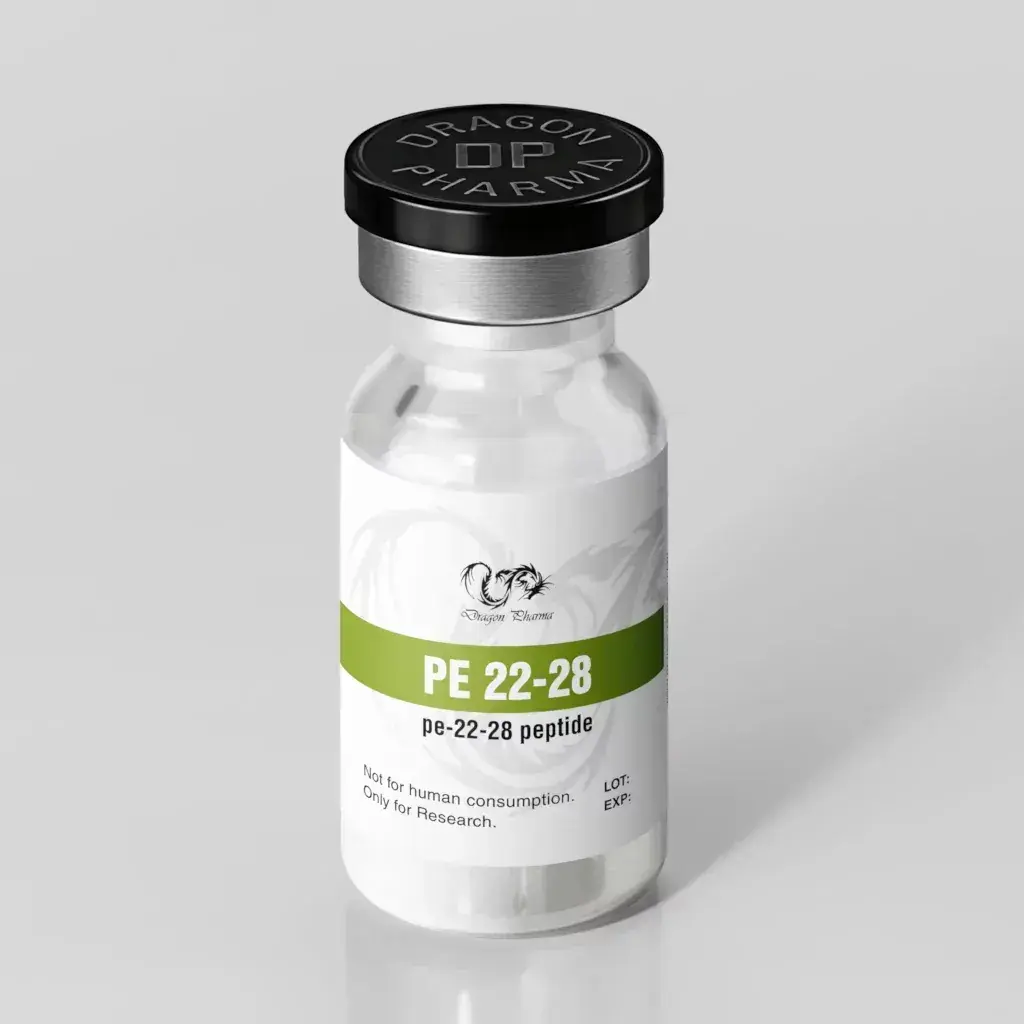
PACAP-Derived Neuropeptide for Cognitive Research
PE 22-28 10 mg represents a cutting-edge advancement in neuropeptide research—a meticulously synthesized fragment of Pituitary Adenylate Cyclase-Activating Polypeptide (PACAP) that targets fundamental mechanisms of synaptic plasticity, cognitive enhancement, and neural protection. This research-grade peptide, comprising the bioactive sequence Gly-Ile-Ala-Gly-Ala-Ser-Asp-Arg (positions 22-28 of PACAP 1–38), offers investigators a powerful tool for exploring cAMP-mediated signaling pathways, neurotrophic modulation, and peptide-based interventions for cognitive optimization. Each vial contains 10 mg of ultra-pure PE 22-28, manufactured in Dragon Pharma's EU-certified facilities under stringent analytical controls that ensure molecular integrity and reproducible biological activity.
PE 22-28 operates through selective activation of PAC1 receptors, triggering intracellular cAMP accumulation and subsequent protein kinase A (PKA) activation—the master regulatory switch for CREB (cAMP Response Element-Binding protein) phosphorylation. This molecular cascade represents the fundamental mechanism underlying long-term potentiation (LTP), the cellular basis of learning and memory formation. Unlike broader neuropeptides that affect multiple receptor systems, PE 22-28's targeted action on the PAC1 receptor provides specific modulation of neuroplasticity pathways without significant cross-reactivity with VPAC1/VPAC2 receptors, making it an exceptional research tool for dissecting precise mechanisms of cognitive enhancement and neuroprotection. For researchers investigating nootropic interventions alongside performance compounds like Methyl-1-Test 10 or Superdrol 10, PE 22-28 offers insights into potential cognitive support mechanisms during intensive training regimens.
The scientific significance of PE 22-28 lies in its position as the minimal active fragment retaining PACAP's neurotrophic properties while exhibiting improved metabolic stability compared to the full-length peptide. Research indicates this heptapeptide fragment crosses the blood-brain barrier with greater efficiency than PACAP 1–38, exhibits resistance to enzymatic degradation by dipeptidyl peptidase IV (DPP-IV), and maintains potent cAMP-elevating activity at nanomolar concentrations. For athletic performance research, these properties suggest potential applications in enhancing motor learning, improving neuromuscular coordination, reducing central nervous system fatigue, and supporting recovery through neuroendocrine modulation. When compared to other cognitive peptides like Semax 5mg or Selank 10 mg, PE 22-28 offers a distinct mechanism focused on the fundamental molecular pathways of synaptic plasticity rather than neurotransmitter modulation.
Dragon Pharma's synthesis utilizes solid-phase peptide synthesis with Fmoc chemistry, followed by reverse-phase HPLC purification to >98% purity and mass spectrometry confirmation of molecular identity. The lyophilized formulation ensures optimal stability for research applications, easily reconstituted with sterile saline or bacteriostatic water for precise dosing in experimental models. For investigators examining the intersection of cognitive enhancement and physical performance, PE 22-28 provides a unique window into how neuropeptide signaling might optimize mind-muscle connection, enhance training adaptation through improved motor pattern encoding, and potentially mitigate the cognitive fog sometimes associated with intense training or certain performance compounds. Its research applications extend to potential synergistic effects with growth hormone secretagogues like CJC-1295 DAC, given PACAP's known cross-talk with GHRH signaling pathways.
Key Research Applications:
Each 2 mL vial contains 10 mg of research-grade PE 22-28 peptide, synthesized and purified under strict quality control standards in Dragon Pharma's certified European facilities for investigative use in approved research protocols.
| Product Name | PE 22-28 10 mg |
| Manufacturer | Dragon Pharma |
| Substance | PE 22-28 (PACAP 22-28 fragment) |
| Packaging | 2 mL sterile glass vial |
| Lab Test Result | HPLC purity >98%, MS confirmed |
| Half-Life | Approximately 30-45 minutes (research estimate) |
| Recommended Cycle | Research-dependent, typically 2-4 weeks |
| Form | Lyophilized powder |
| Aromatization | None (non-hormonal peptide) |
| Research Dosage | 10-100 mcg/kg in animal models |
PE 22-28 is administered via subcutaneous or intraperitoneal injection in preclinical research models. Reconstitute the 10 mg vial with 1-2 mL of sterile saline or bacteriostatic water. For cognitive enhancement studies, typical research doses range from 10-100 mcg/kg body weight, administered once daily. For neuroprotection studies, pre-treatment 30-60 minutes before induced injury models is common. Injection sites include abdominal subcutaneous tissue or standard intraperitoneal locations per institutional protocols. Research suggests optimal effects in the 50-200 mcg total dose range for standard rodent models, with effects typically measurable within 30-60 minutes post-administration through behavioral assays or biochemical markers.
For studies examining cognitive effects: Utilize standardized behavioral tests (Morris water maze, passive avoidance, novel object recognition) with proper controls. Biochemical endpoints should include hippocampal cAMP levels, CREB phosphorylation, and BDNF expression. When researching potential athletic applications: Consider motor coordination tests, reaction time measurements, and central fatigue assessment during prolonged exercise models. For investigations involving other compounds like Clenbuterol or T3, monitor potential interactions between metabolic state and cognitive function.
Research models should be monitored for potential hemodynamic effects (PACAP receptors mediate vasodilation), glucose metabolism changes, and core temperature fluctuations. Behavioral observations should include activity levels, grooming behavior, and social interactions. When studying alongside stimulant compounds like Helios or Salbutamol, careful cardiovascular monitoring is advised. Research suggests PE 22-28 is well-tolerated in preclinical models at therapeutic doses, with no significant adverse effects reported in controlled studies.
Unreconstituted: Store lyophilized PE 22-28 vials at -20°C (-4°F) for long-term stability (up to 24 months). The peptide fragment maintains stability under these conditions with minimal degradation. For short-term storage (up to 30 days), refrigeration at 2-8°C (36-46°F) is acceptable. Avoid repeated freeze-thaw cycles as this can lead to peptide aggregation and reduced biological activity.
Reconstituted: After mixing with appropriate vehicle (sterile saline recommended for research), use immediately for optimal activity. If necessary, reconstituted solution can be stored at 2-8°C (36-46°F) for up to 7 days, though some activity loss may occur after 48 hours. For behavioral studies requiring precise dosing, fresh preparation before each administration is strongly recommended.
Research Handling Notes: Use aseptic technique for all reconstitution and administration procedures. Protect from light exposure using amber vials or aluminum foil. Gently swirl to dissolve—avoid vortexing which can introduce oxidation. Aliquot into single-use portions if planning multiple administrations to minimize freeze-thaw cycles. Document storage conditions and duration as part of research methodology.
PE-22-28 is a PACAP-derived peptide primarily used for cognitive enhancement, neuroprotection, and metabolic optimization. It enhances learning and memory through cAMP/CREB pathway activation, protects neurons against oxidative stress and excitotoxicity, improves cerebral blood flow, modulates neurotransmitter systems, and supports mitochondrial function in neural tissues.
No, PE 22-28 is not FDA-approved for human therapeutic use. It is classified as a research chemical for laboratory investigation of neuropeptide signaling, synaptic plasticity, and neuroprotection mechanisms. Dragon Pharma supplies PE 22-28 exclusively for research purposes to qualified investigators studying peptide-mediated neurotrophic effects in preclinical models.
Unlike peptides like Semax or Selank that primarily modulate neurotransmitter systems, PE 22-28 works through PAC1 receptor activation of the cAMP/PKA/CREB pathway—the fundamental molecular switch for memory formation. This makes it uniquely positioned to enhance synaptic plasticity, neurogenesis, and long-term potentiation at the most fundamental level of neural signaling.
For athletes, PE 22-28 may enhance mind-muscle connection through improved motor cortex function, reduce central nervous system fatigue during prolonged training, improve reaction time and coordination, support recovery through neuroendocrine modulation, and potentially enhance growth hormone secretion through PACAP receptor cross-talk with GHRH pathways.
For preclinical research, PE 22-28 is typically administered via subcutaneous or intraperitoneal injection at doses of 10-100 mcg/kg. Reconstitute with sterile saline or bacteriostatic water, administer once daily. Research suggests effects are dose-dependent with optimal neurotrophic activity in the 50-200 mcg range for standard research models. Always follow institutional protocols for peptide administration.
Mitochondrial-Targeted Peptide (Elamipretide)

Liver-Specific Peptide Bioregulator
Testicular Peptide Bioregulator
Liver-Specific Peptide Bioregulator
Official distributor of Dragon Pharma products. Pharmaceutical grade research compounds shipped worldwide.
USA Domestic: 4-5 business days
International: 13-15 business days
Important Disclaimer: All products sold on this website are for research purposes only. They are not intended for human consumption or diagnostic use. These products are not drugs and are not approved by the FDA for the treatment, cure, or prevention of any disease or condition. By purchasing from our store, you acknowledge that you are a qualified researcher and understand the proper handling procedures for these compounds. Keep all products out of reach of children and unauthorized persons.
© 2009 - 2026 Dragon Pharma™. All rights reserved.